
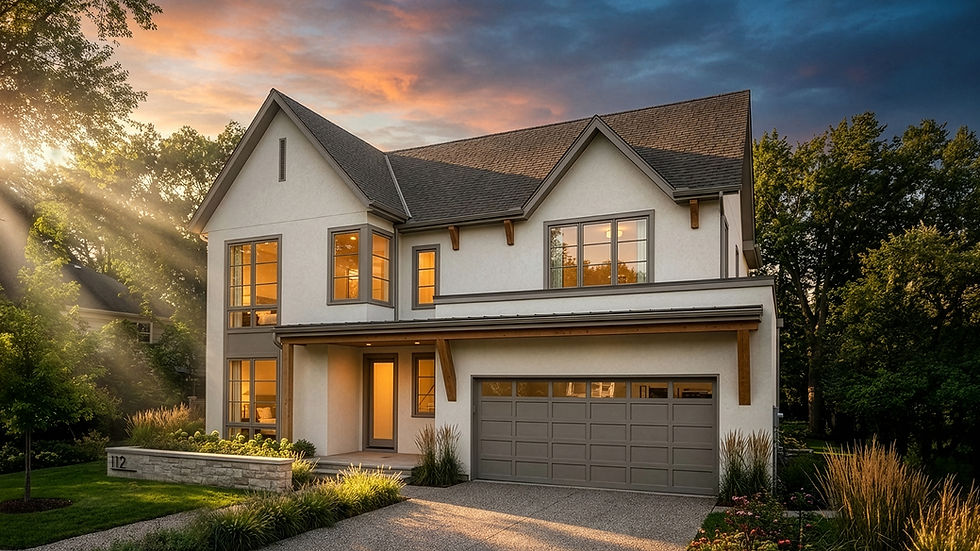
PHASE 1
FROM DIRT TO DESIGN
The most important work in a custom home happens before construction ever begins...
The story of this home intends to show that process clearly. As each phase is completed, another story of the build will be unveiled. Drive by the location to see it in progress, share your thoughts with us, or consider buying and taking over the design process yourself at any time.
We'd love to hear your thoughts and ideas as we progress through this custom spec home build.
Why are we building this spec home in Downers Grove?
This spec home was designed to give prospective buyers a jump-start on the custom homebuilding process. We also wanted to document what actually happens before excavation — the decisions that protect budget, prevent redesign, and shape the outcome long before materials are ordered.
Pre-construction is where assumptions are replaced with data. Where vision is tested against reality. Where discipline determines whether a home feels effortless later. This project was built to make that phase visible.
If you're interested in living in Downers Grove in a high-performance healthy home designed around how YOU live, contact us today and get involved in the design process.
Timeline Overview
August 2025 - October 2025
October 2025 - January 2026
January 2026 - February 2026
SELECTING THE LOT AND DETERMINING ITS FEASIBILITY
INSPIRATION AND DISCOVERY
FOOTPRINT, FLOOR PLAN AND DRAWINGS

Targeting the Right Community
Before identifying a lot, we identified the kind of environment the home belonged in.
We focused on areas where this kind of home makes sense—where quality, performance, and long-term thinking actually matter.
The goal wasn’t just to find a lot. It was to find the right setting for someone to eventually call home.
Strong school districts. Established walkability. Stable property values. Neighborhoods where architectural scale and long-term investment make sense.
We also understood the footprint we intended to design — a narrower, well-proportioned home suited to lots typical of this area. Years of experience in both real estate and construction informed that framework before we ever stepped onto a property.
Context comes first. The home must respect it.
WATCH OUR DRONE VIDEOS TO SEE THE NEIGHBORHOOD AND SURROUNDING AREA
112 6th St Downers Grove Area View


sign-backup-out

front-flyaround-street

angle-zoomback

Lot Selection: Strategic, Not Emotional
The property was acquired off-market through our brokerage network. It required a tear-down, which creates opportunity — but only when the fundamentals align.
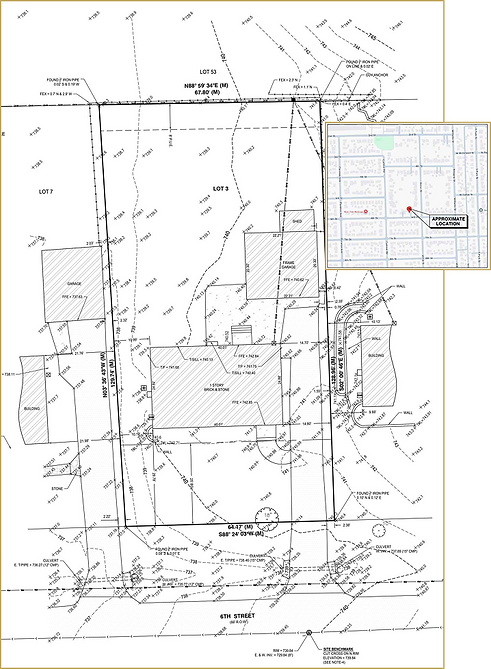
We evaluated setbacks, buildable envelope, lot coverage, and proportions before acquisition. The goal was simple: confirm that the land could support the home we intended to design without forcing compromises.
This lot was clean. The geometry worked. The dimensions supported the footprint.
Surveys & Site Intelligence
Boundary and topographical surveys informed critical decisions:
-
Garage placement
-
Driveway slope
-
Foundation type
-
Grading strategy
-
Stormwater planning
The architect’s digital footprint was exported to the site engineer, initiating detailed grading and drainage plans.
Start with how you want to live, not with the land.
A Critical Lesson when building a custom home
For custom clients, the lesson is sequencing.
When a property is purchased before its constraints are understood, design flexibility narrows quickly. Setbacks, grading, and municipal restrictions can quietly dictate outcomes.
The better path is clarity first:
-
Define spatial priorities.
-
Understand lifestyle goals.
-
Then evaluate property accordingly.
Early builder involvement protects both vision and investment.
Engaging the Architect: The Aligned Design Model
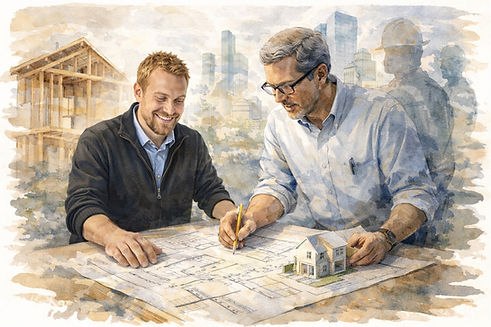
The architect was engaged after the property was confirmed, ensuring that design incorporated real constraints from the start.
Setbacks, grading realities, and municipal requirements informed the work immediately. The process was collaborative — builder, architect, and design perspective aligned from the beginning to prevent overdesign and late correction.
Architecture must be both aspirational and buildable.
HERE IS A BASIC OUTLINE AND SOME EXAMPLES THAT WERE SENT TO THE ARCHITECT TO START FRAMING UP THE FLOORPLANS
 |
|---|
 |
 |
 |
FIRST FLOOR
Living Room
Kitchen
-
Walk in pantry
-
Appliance garage
-
Breakfast bar
-
Breakfast island
Formal Powder
Larger Dining Area
Mudroom
-
Dog wash and Feeding area
-
Vacuum shoot to laundry room on 2nd floor
- Large PVC
Indoor Outdoor connection
SECOND FLOOR
Primary Suite
-
Potential sauna and cold plunge accessible to the primary and potentially to the rest of the 2nd floor.
Guest Suite
-
Jack and Jill bath to the 2 additional rooms
-
Laundry - use as feature room “shared Spa”
THIRD FLOOR
-
Office
-
Potentially a bonus room with a full bath instead of 3 bathrooms on 2nd floor
BASEMENT
-
Likely unfinished for now, but will plan it out for future finishing.
-
Workout area - does spa go here instead of the primary suite
EXTERIOR
-
Patio
-
Gas hook up
-
Future grill/kitchen
-
Firepit
GARAGE
-
Design a two-car with third bay option
-
Oversized with room for storage and bench
Square footage: 3000-3500 sqft above grade
Construction Costs: $900,000

Discovery: Translating Vision into Plans
With the site secured and validated, the architectural process began with discovery.
We aligned on room counts, spatial relationships, circulation flow, and how the home should function daily. This stage translates lifestyle into a measurable program.
The architect received a clear framework — not vague inspiration — which allowed concept development to begin with direction.
Discovery anchors creativity to purpose.


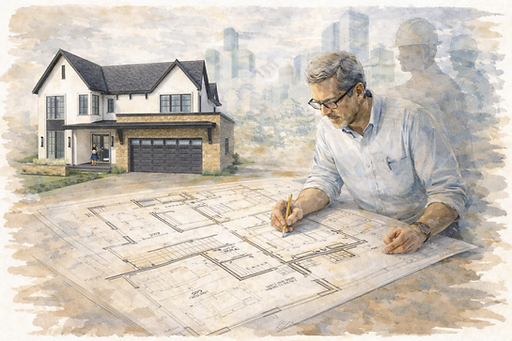

Concept Development:
Floor Plans & Elevation
The first deliverables were conceptual floor plans and a front elevation.
These were not final drawings. They were strategic drafts — establishing spatial flow, exterior massing, and overall proportion.
We reviewed, refined, and redlined thoughtfully. Adjustments to circulation, kitchen positioning, suite orientation, and roofline balance ensured that the home felt coherent both inside and out.
Concept work is iterative by design. It is where ideas are strengthened, not rushed.
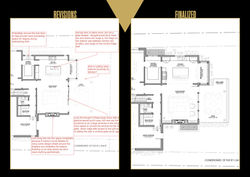 | 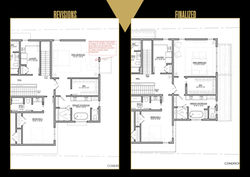 |  | 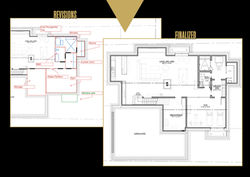 |  |
|---|

Designed to Be Memorable
While disciplined in process, this home was also designed with intention.
The basement integrates a dedicated wellness center — gym, sauna, steam, recovery elements — alongside an entertainment wing with bar, lounge, and gathering space.
These are not excess features. They reflect how modern homeowners prioritize health, hospitality, and experience within their daily environment.


Construction Drawings Finalized
Concept Approved
With revisions complete, the final concept was approved and authorized to move into full construction documentation.
At this point, the home transitioned from vision to executable plan.
Engineering coordination, system layouts, and detailed drawings would follow.
Phase 1 had done its job.
The project transitions from conceptual to executable.


Budget Range Further Defined
This initial price per square foot range is a high-level estimate based on your goals, design direction, and the overall scope of the home—including lot acquisition and custom features.
As decisions are made and the design becomes more defined, this range is continuously refined into a more accurate and detailed budget.