
Custom Home Decision Timeline: Every Decision You’ll Make—and When

Building a custom home means deciding how you want to live. Some are exciting, like planning your kitchen or choosing the view from your living room. Others are less visible but just as important, including how your home manages moisture, maintains comfortable temperatures, and supports healthy indoor air.
One of the biggest surprises for homeowners is how early some of these decisions need to happen. An appliance choice can affect the floor plan. A plumbing fixture can influence what goes inside a wall. Outdoor living plans can affect how the home sits on the lot.
This custom home decision timeline outlines the major choices at each stage, helping you understand what to prepare for before design and construction begin.

1. Before Buying a Lot: Set Your Custom Home Budget and Priorities
Start by defining your total investment and what you need your home to accomplish.
Your custom home budget should account for five major categories:
Land acquisition
Lot development
Architecture and design
Rough construction
Finishes
Looking at these categories together helps you understand how much of your budget is available for the house itself. A property that requires extensive site work, for example, can leave less room for square footage or finish upgrades.
This is also the time to discuss financing with a lender and identify your priorities.
Consider your preferred location, approximate home size, essential rooms, accessibility needs, and outdoor spaces.
Decide early:
Your overall investment range, financing approach, essential features, and areas where you can be flexible.
For a closer look at this first step, explore budgeting and financing a custom home.
2. Before Committing to Land: Evaluate Whether the Lot Fits Your Plans
A lot’s location and asking price tell only part of the story. The property also needs to support the home you want to build.
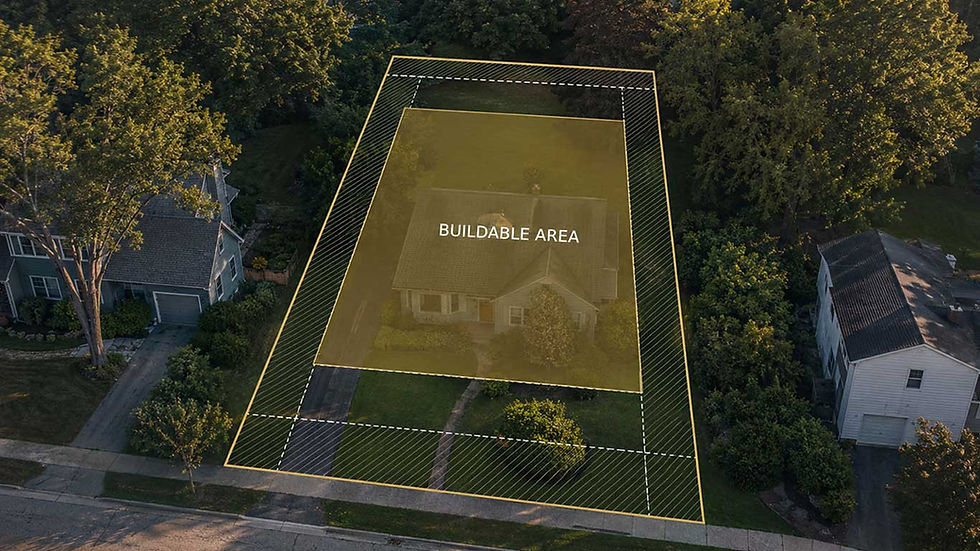
Before committing, investigate factors such as zoning, setbacks, utility access, drainage, topography, and potential demolition or site preparation. These conditions can affect the home’s footprint, placement, design, and total cost.
For buyers in Chicago’s western suburbs, requirements can vary by municipality and property. Bringing a builder into the conversation early helps connect those requirements to your goals.
Decide early:
Whether the property supports your priorities and whether the likely development costs fit your budget.
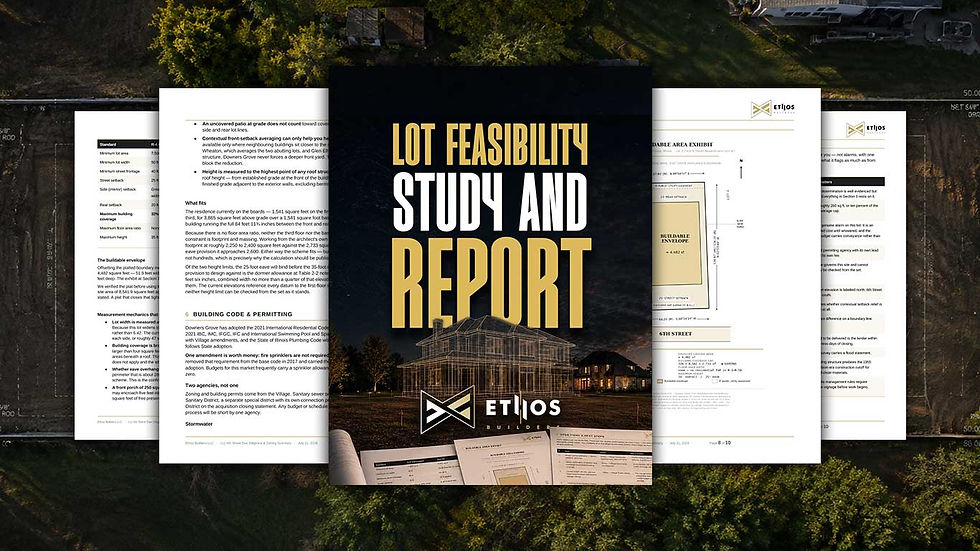
Ethos Builders offers a free Lot Feasibility Study & Report to help you better understand a property before moving forward.
3. During Custom Home Design: Finalize the Layout and Building Performance Goals
Design is where your priorities become a coordinated plan.
Major decisions include the home’s placement, room sizes, floor plan, window locations, ceiling heights, garage configuration, and relationship to outdoor spaces.
Think through daily routines as carefully as appearance. Where will groceries enter the house? What should be near the laundry room? Will you need quiet workspaces, room for guests, or a main-floor bedroom in the future?
This is also the time to establish goals for comfort, durability, indoor air quality, and energy efficiency. Insulation, air sealing, windows, ventilation, and heating and cooling systems work together. Planning them as a system helps the team coordinate the design.
Decide early:
The floor plan, architectural direction, major structural features, and building performance priorities.
Changing these elements later may require revised drawings, additional coordination, or completed work to be modified.
4. Before Construction: Coordinate Materials, Selections, and Ordering
Many selections need to begin before their installation date approaches.
Windows, exterior doors, roofing, siding, masonry, and other exterior materials influence the home’s appearance and construction details. Their availability also needs to fit the project schedule.
Kitchen and bathroom planning should be underway as well. Cabinet layouts, appliance specifications, plumbing fixtures, and lighting plans can affect dimensions, utilities, and installation requirements.
You do not necessarily need to choose every decorative detail before construction starts. You do need a selection schedule that identifies what must be approved, ordered, and available at each stage.

Decide early:
Exterior materials, window and door specifications, major appliance requirements, and selections your builder identifies as priorities for ordering.
5. Before Rough Plumbing, Electrical, and HVAC: Plan What Goes Inside the Walls
Once framing takes shape, it becomes easier to imagine living in the home. By this point, many functional decisions need to be ready for installation.
These commonly include:
Plumbing fixture locations and required in-wall components
Outlets, switches, lighting, and ceiling fans
Appliance connections and ventilation
Heating and cooling equipment and distribution
Internet wiring, security systems, speakers, and smart home features
Wiring or other provisions for future additions
Consider how you will furnish and use each room. A home office, kitchen island, wall-mounted television, or future electric vehicle may need specific preparation.
Decide before walls close:
The locations and requirements for the systems and features concealed behind finished surfaces.
A coordinated walkthrough with your builder can help confirm these details before insulation and drywall.
6. Before Interior Installation: Finalize Cabinets, Flooring, Tile, and Millwork
Interior selections work best when considered together.
Cabinet dimensions affect countertops and appliance placement. Flooring thickness affects transitions between rooms. Tile patterns influence layout and installation. Trim profiles contribute to the architectural character of the home.
At this stage, decisions typically include cabinetry, countertops, flooring, tile, interior doors, trim, stair details, and finish colors.
Review samples together whenever possible. A material you like on its own may look different beside the surrounding finishes.
Decide before ordering and installation:
Final materials, dimensions, layouts, colors, and installation details.
Your builder’s schedule should establish the actual deadlines. A product installed near the end of construction may still need approval much earlier.

7. Before Move-In: Review Operation, Maintenance, and Final Details
As construction approaches completion, attention shifts toward making the home ready for everyday use.
Final walkthroughs let you review remaining items, understand how equipment operates, and learn about maintenance responsibilities.
Ask about ventilation controls, filters, shutoff locations, warranties, and recommended care for your finishes. Knowing how to operate and maintain the home helps you get the intended performance from it.
Confirm before move-in:
Outstanding items, system instructions, maintenance information, and the process for follow-up questions.
How Much Time Will Custom Home Decisions Take?
Your involvement will vary throughout the project. Early planning involves broader conversations about budget, lifestyle, and design. Selection periods may require appointments, sample reviews, and approvals. Construction brings scheduled check-ins and occasional questions.
You do not need every answer on day one. A clear process should help you understand:
What needs your attention next
When a decision is due
How the options affect your budget
What a change would mean for the schedule
Decision deadlines should reflect design coordination, ordering, and installation needs. Your project’s calendar will depend on its design, materials, and construction sequence.
Plan Your Custom Home Decisions With Ethos Builders
Understanding the decisions ahead makes it easier to prepare, ask useful questions, and move forward with confidence.
Ethos Builders emphasizes education and early collaboration, helping homeowners connect their budget, property, design, and building performance goals.
Whether you are establishing a budget, evaluating a lot, or beginning to define your home, getting a builder involved early can help bring those choices into focus.
Download this checklist to reference as you go through your custom home journey.


